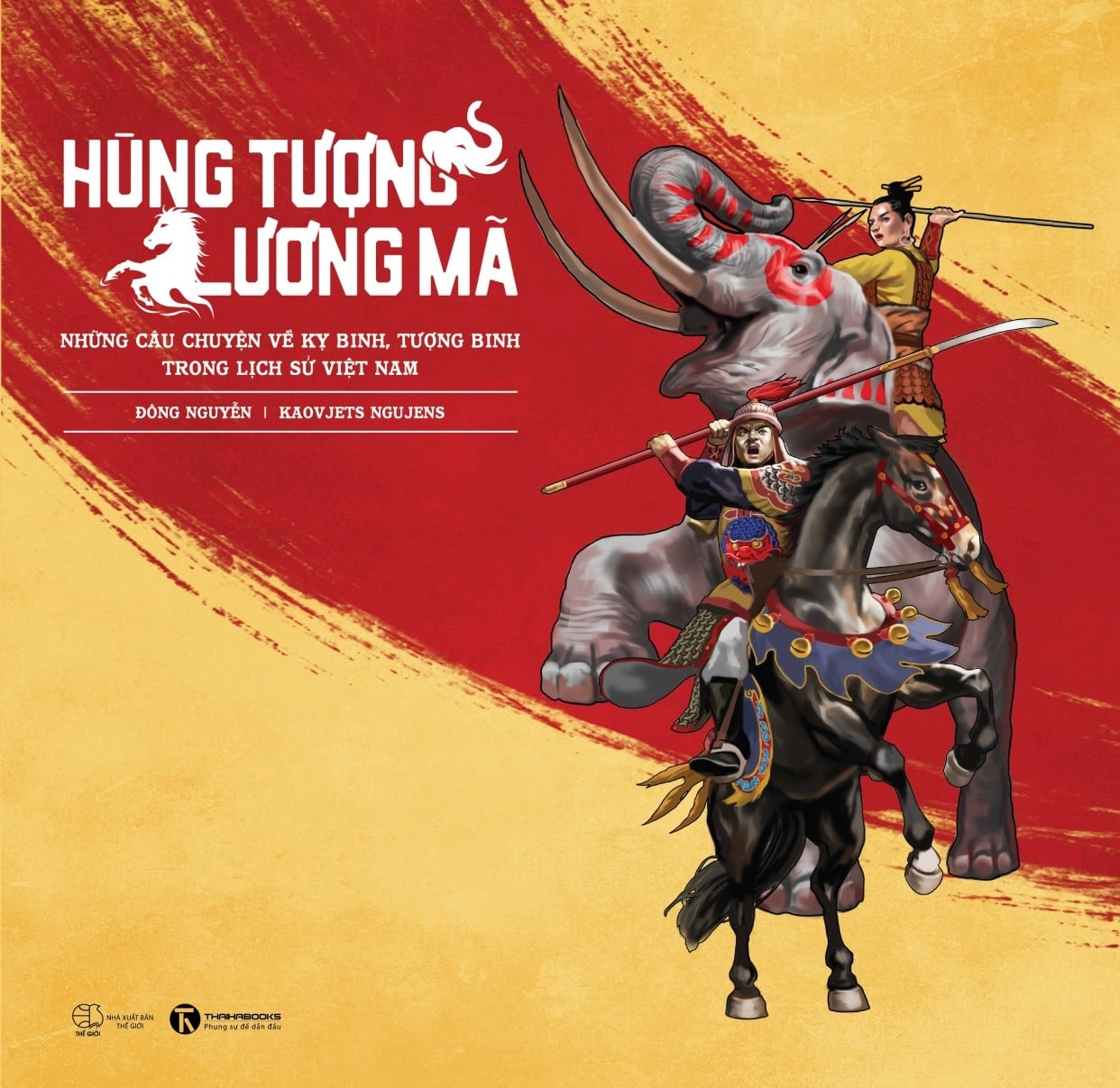


[ThaiHaBooks] When the battlefield echoed with the thunder of hooves and the shadow of charging elephants.
Throughout human history, cavalry and war elephants have always held a special place. Horses offered superior speed and mobility; while elephants brought raw power, ferocity, and an overwhelming presence. From ancient to early modern times, these two forces repeatedly turned the tides of war, becoming enduring symbols of authority and military might.
For the Vietnamese people, the image of war elephants brandishing their tusks and warhorses tossing their manes exists not only in history books. They have seeped into the national memory, becoming symbols of courage, the will to defend the nation, and the aspiration to expand borders.
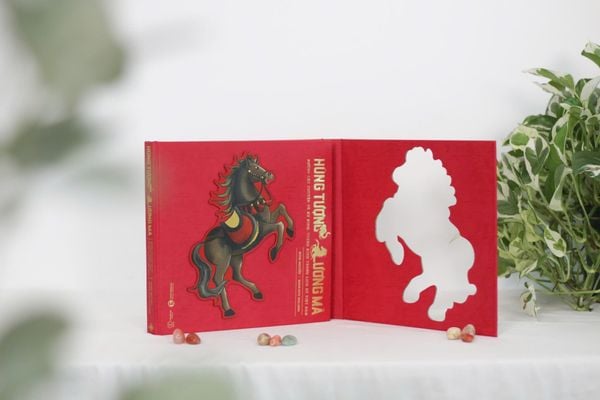
“Mighty Elephants, Noble Steeds” takes readers back to ancient battlefields, where elephants and horses marched alongside generals, creating glorious feats of arms.
This book is not merely a meticulous research work, but a journey to explore our ancestors’ military world through details rarely known:
Each page acts as a door opening to the past, where every hoofbeat and every trumpet of an elephant marked countless heroic milestones.
MAIN CONTENTS:
Part 1: Mighty Elephants – A profound and comprehensive study of Vietnamese War Elephants
Part 2: Noble Steeds – Recreating the Vietnamese Cavalry force through the ages
✔ A Rare Perspective on Vietnamese Military History
The book explores a topic that has rarely been written about systematically: war elephants and cavalry—two forces that helped shape the nation’s destiny.
✔ Meticulous – Scholarly – Accessible
The content is presented coherently, rich in historical evidence, yet maintains an engaging narrative voice, making information easily accessible to readers.
✔ A Book for All History Lovers
From military researchers and enthusiasts to general readers who love Vietnamese culture and history.
✔ A Meaningful Gift for the Year of the Horse (Binh Ngo)
The Year of the Horse – a symbol of speed, strength, and breakthrough.
Dong Nguyen
Kaovjets Ngujens
[Mighty Elephants] Firearms and ammunition appeared in China in the 13th century. In Vietnam, they were recorded at the latest by the end of the Tran Dynasty. However, it was not until the Battle of Da Bang Citadel in 1406 that we witnessed their effect on war elephants. The Ming troops took advantage of the night to scale the walls and used firearms and arrows to wound the Ho army’s elephants deployed inside. Additionally, the Ming used the old tactic of General Zong Que (from the Liu Song era), creating fake lion figures to cover their warhorses. Combined with the chaos of the night, this caused the war elephants to turn and flee. Before the superior power of firearms, flesh and blood—even skin as thick as an elephant’s armor – could not withstand the piercing force.
[Mighty Elephants] The Giang Vo Field—the largest military academy and training ground of the Le So period—was also the site for the drills of the Elephant Patrol Guards (Vệ Tuần Tượng). Beyond the space and equipment for exercises, there were also tiled elephant stables—sturdy structures where elephants could shelter during training. This demonstrates the imperial court’s significant concern for both the training and the health of their war elephants.
[Mighty Elephants] In battle, war elephants were often deployed at the vanguard or on the flanks to break the enemy’s formation. When charging, elephants could use the power of their legs, trunks, and tusks to toss aside or trample soldiers, throwing the enemy ranks into disarray. Their long tusks (which could exceed 4 meters, as observed by Christoforo Borri) acted as a pair of lances, stabbing or slashing with a force greater than any warrior. Thanks to their colossal size, elephants could crash through defensive lines and pierce tight infantry formations. Psychological warfare was also a key advantage; their roaring, massive stature, and destructive power could instill fear and break the enemy’s spirit even before actual combat began, especially against troops who had never faced elephants.
[Mighty Elephants] The elephants ridden by great generals also served as mobile observation platforms, thanks to their superior height compared to infantry and cavalry. Standing on the elephant’s back, a commander could survey the entire battlefield, assess the situation, coordinate forces, and spot threats from afar. Furthermore, the elevated position ensured that the commander’s signals and orders were clearly visible to the troops below. King Gia Long once advised General Nguyen Van Thanh to observe and command from the rear rather than recklessly rushing into combat: “The General commands the three armies; rushing into the fray to break enemy spears is the duty of the lieutenants. From now on, when in battle, choose a tall, strong war elephant to ride, so you may look down from above and issue orders. Assign the combat-hardened elephants to your subordinate generals, and let the brave warriors advance first to wave the flags and cut down the enemy.”
[Noble Steeds] Historical records mention nothing further about this force [armored cavalry]. We believe that the Early Le Dynasty failed to maintain it, as equipping horses with armor required immense national resources. The state needed not only to manufacture and maintain the armor but also to breed warhorses strong enough to carry the weight and regularly train them to be accustomed to the armor. Only nations rich in horses like the Dali Kingdom or large empires like the Song could reduce or afford such costs. Clearly, the few hundred horses King Le Long Dinh captured in 1008 were insufficient for cavalry needs. Evidence lies in the fact that in 1012, King Ly Thai To had to order raids on merchants in Vi Long prefecture to seize horses. The Ly Dynasty captured over ten thousand horses, a scale many times larger than Le Long Dinh’s campaign four years prior. We suspect that for some reason, the Dai Co Viet state at that time had an urgent need for such a large number of horses, even though these raiding activities carried the immediate risk of inciting unrest among the northwestern tribes.
[Noble Steeds] The Lord once clearly stated his policy on cavalry: “The Lord told his courtiers: Among the things the military relies on, horse strength ranks first. Drills are also a form of martial instruction. He then ordered the repair of the official road from Van Xuan to Thanh Ke station, the construction of the Royal Horse Platform, and mandated that civil and military officials, along with the horse squads, practice frequently. As a result, the cavalry and archers all became highly skilled.”
[Noble Steeds] Undoubtedly, the Tay Son army utilized their advantage of having many horses to execute lightning-fast marches, alongside other means such as elephants and boats. In return, it seems the Tay Son cavalry was not highly combat-proficient, at least in the early stages of the movement. In the Battle of Cam Sa (1775), the forces of leaders Nguyen Nhac and Tap Dinh were broken by the war elephants and cavalry of Hoang Dinh The on the Trinh side. Regrettably, we have not yet found documents discussing the cavalry under Emperor Quang Trung to make an assessment of their quantity and combat capability.
[Noble Steeds] In principle, training methods were similar across civilizations. Initially, horses were desensitized to the sounds of drums, gongs, clashing weapons, and shouting from a distance. As they grew accustomed, the noise intensity was increased to simulate actual battlefield conditions. Some places used flapping fabrics or soldier dummies to accustom horses to chaotic movements. Horses were also acclimated to fire and taught to navigate low obstacles to handle the uneven terrain caused by corpses and rubble on the battlefield. Additionally, horses needed to be trained to stand in pairs within a formation; due to their herd mentality, they are less likely to panic or trigger a mass flight reaction when threatened if they are with their kind.
[Noble Steeds] Thus, long-range attacks from horseback were an effective cavalry tactic maintained continuously through all dynasties. We assess that this was a much more common method than melee combat with spears or swords, as it leveraged the cavalry’s advantages of speed and agility, reduced the risk of counter-attacks, and depleted the enemy more effectively. In melee combat, cavalry must get very close to the enemy, making them vulnerable to being struck back or pulled off their horses. When using ranged weapons, cavalrymen do not need direct contact, reducing the risk of injury or being surrounded by numerous infantry. They can shoot and quickly relocate without getting bogged down in a struggle. Consequently, cavalry did not need to be fully armored; they could use speed and mobility for protection, reducing equipment costs.
[Noble Steeds] Regardless of the weapon used, the cavalry’s mission was to advance before the infantry to harass and prevent the enemy from forming ranks, or to deplete the enemy’s numbers, stamina, and morale before the infantry moved in to break the line. In some cases, generals chose to break enemy lines by ordering a direct cavalry charge to utilize the horses’ speed and momentum, rather than shooting from afar. Infantry standing in formation often lost their nerve seeing a herd of horses charging, amplified by the thunder of hooves and the riders’ war cries. Faced with this psychological terror, they might flee before the cavalry even made contact, causing the formation to collapse faster. When cavalry crashed into the enemy formation, the front rows could be trampled or pushed back, creating gaps. Subsequent waves of cavalry or following infantry could then exploit these breaches to penetrate deep and shatter the enemy’s organization. This mission was usually reserved for heavy cavalry (thiết kỵ), equipped with armor to withstand impact and melee combat. As mentioned, since the Early Le period, our kings requested horse armor from the Song Dynasty. By the time of King Le Thanh Tong, there was a title of “Lieutenant of Heavy Cavalry” (Thiết kỵ úy) in the military ranks. However, there is no direct and reliable evidence of a large heavy cavalry force in Vietnam until the Southern and Northern Dynasties period.
Thaihabooks proudly presents!
Book Detail:
| Book Title | Mighty Elephants, Noble Steeds: Tales of Cavalry and Elephant Warfare in Vietnamese History |
| Author | Dong Nguyen, Kaovjets Ngujens |
| Price | 399,000 VND |
| Pages | 268 pages |
| Publisher | The Gioi Publishers |
| Dimensions | 24.5 x 23 cm |
| Barcode – ISBN | 8935280920767 – 9786320202027 |

Thái Hà Books 2021 All right reserved