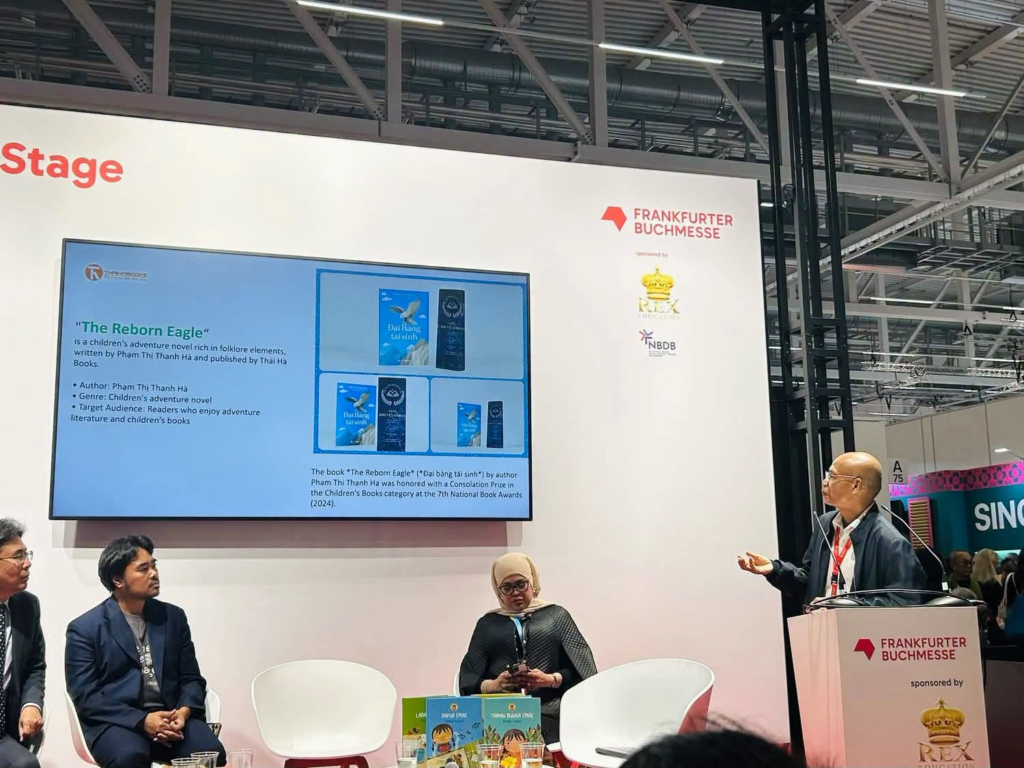
I met him on an autumn afternoon in Hanoi, when yellow leaves drifted lightly along the old streets. Dr. Nguyễn Mạnh Hùng stood there, in a small teahouse veiled with the smoke of agarwood incense, dressed in a simple brown cloth robe, his smile like warm sunlight dissolving the chill of mist. He was neither an ascetic Zen monk nor an aloof wealthy businessman often seen in the press; rather, he was a rare blend of both the unhurried demeanor of an ancient scholar, yet the sharp eyes of someone who had passed through countless battles in the marketplace…
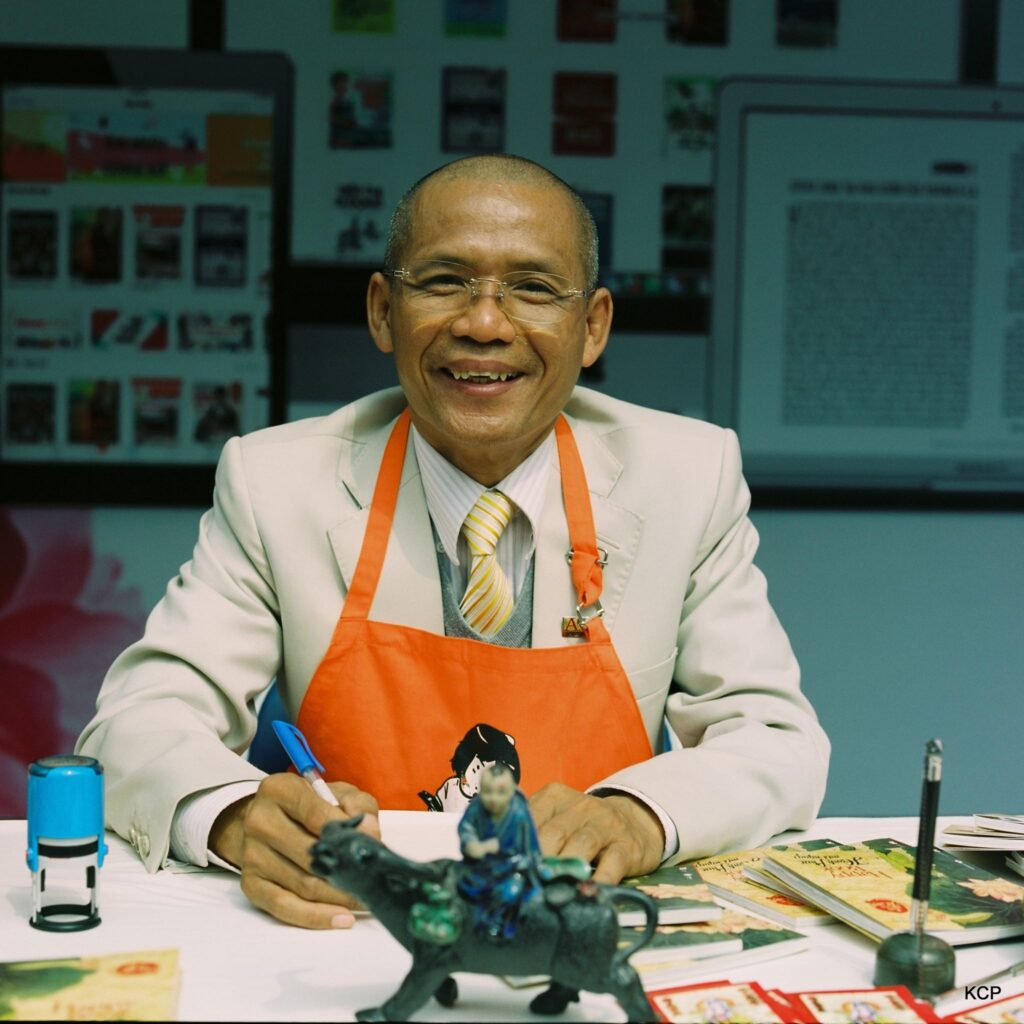
“Dharma is not far away; it is right here in this cup of tea,” he laughed, lifting a warm teacup. His voice was deep and gentle, touched with humor. A young woman sitting opposite hesitated: “But how can I find peace when work sweeps me away like waves?” He tilted his head, eyes narrowing as if looking through the fog of life itself: “My child, storms are not in the ocean. Storms are in the mind that cannot be still.”
That word “stillness,” I later realized, was the essence of this lay practitioner’s path. He did not teach people to escape ordinary life, but showed them how to remain steady within the whirlpool. “Meditation in Every Moment,” the title of his well-known book, turned out not to be some lofty philosophy, but a simple reminder: every breath, every step, every gesture, every encounter can be an opportunity for mindful awakening…
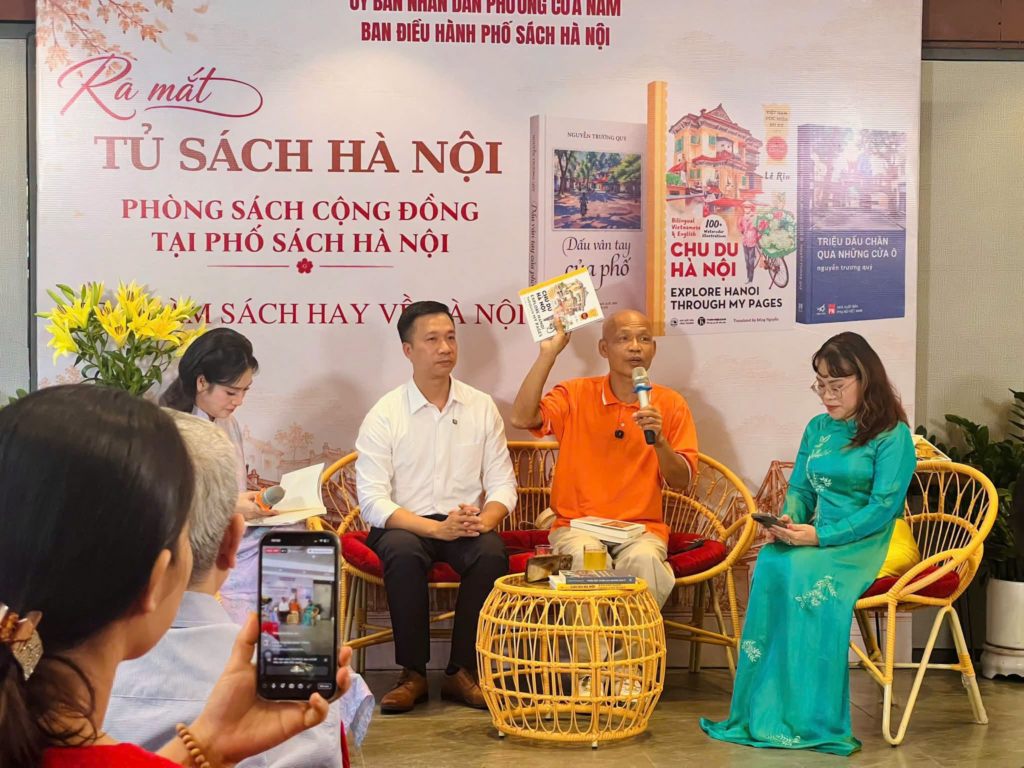
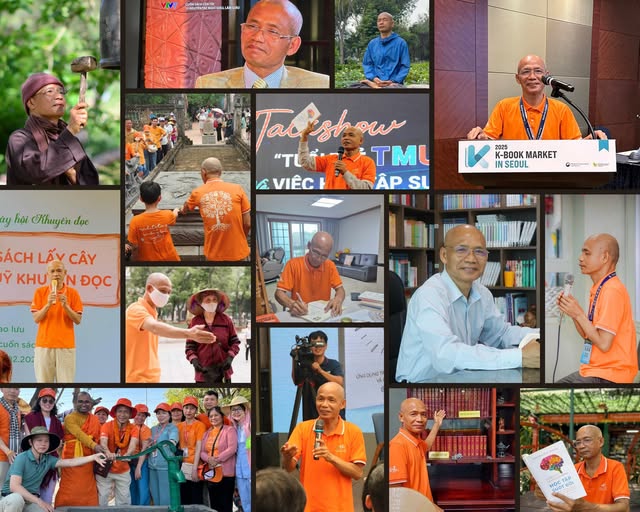
Once, I saw him at a noisy book launch, holding a microphone and speaking about “the art of listening,” his face calm and unmoved. When a journalist questioned the conflict between business and ethics, he replied softly: “Every ancient tree needs deep roots. A business that wishes to endure must have roots grounded in the heart.” His words were like gentle rain not dramatic, yet quietly penetrating…
I followed him to the “Kindness ATM,” where machines dispense not money but essential supplies for the poor. He stood there in a windbreaker, slightly rumpled, personally arranging packets of instant noodles. An elderly woman trembled as she held his hand: “Are you a Bodhisattva?” He smiled kindly: “Grandmother, we are only small raindrops. When it rains, the plants naturally grow green.”
In him, the path and everyday life were never separate shores. I remembered his story about Anāthapiṇḍika — the wealthy merchant during the Buddha’s time who used his rightful earnings to build monasteries worth thousands of gold coins. “Practice does not mean abandoning the world,” he said, gently stroking an old book, “but transforming the world into a place of practice.”
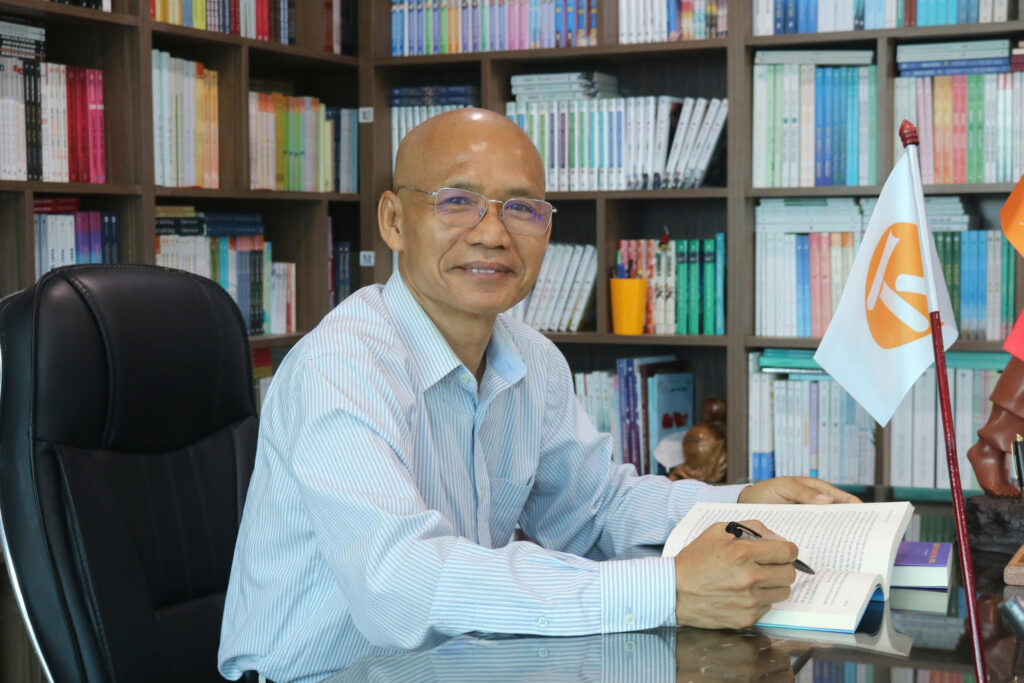
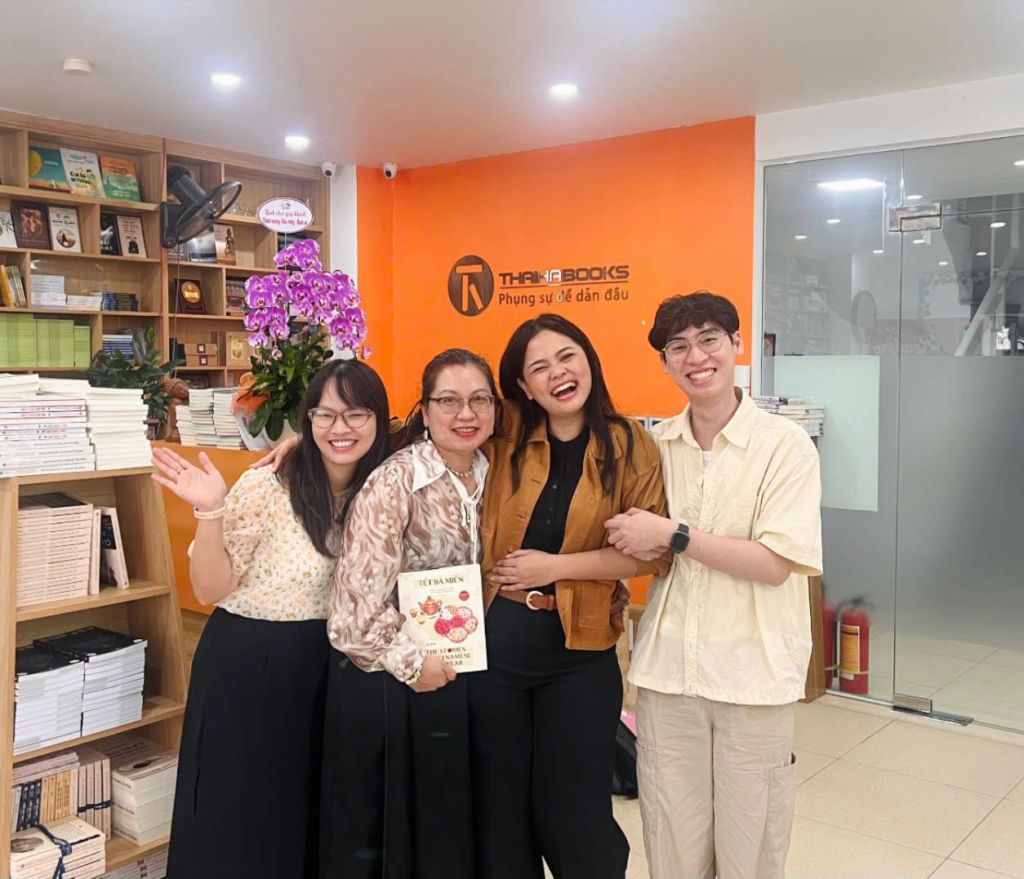
Inside his office at Thái Hà Books, books rose like mountains from Pali scriptures to modern management works. When I asked about this diversity, he laughed: “Books are like people don’t divide them into East or West. Each one is a seed; planted at the right time, it will bloom.” The way he used business to spread knowledge reminded me of ancient trading caravans that carried both silk and spiritual teachings…
That day, rain suddenly fell. We sat drinking tea while droplets tapped softly on the roof. He spoke of his years studying in Russia a time when he became a millionaire through part-time work, yet spent snowy nights alone in the library devouring the Majjhima Nikāya in Russian. “Cold to the bone,” he smiled, eyes half-closed, “but the heart was warm, seeing the Buddha’s teachings transcend language.” Now fluent in five languages, he still enjoys translating scriptures in his own way: “Every translation is a new moment of insight.”
Strangely, though a PhD, he never used academic jargon when speaking of the Dharma. His sayings were surprisingly simple: “Is life unsatisfactory? No life is a school. Unsatisfactoriness is just homework.” Or: “Love is like tea too hot and it burns, too cold and it loses flavor.” These phrases circulated among Buddhist communities like modern koans.
I asked him how he balanced meditation with the pace of business. He took out his phone and opened the Fonos app he had created: “Listen!” His voice came from the small speaker, reciting a discourse on loving-kindness. “Technology is not opposed to practice,” he explained, “if we use it as a boat to carry people across the river.”
As dusk settled behind rows of high-rise buildings, I saw him sitting cross-legged on a wooden step with the “Meditation in Every Moment” group. No incense, no bells only soft breathing blending with the rhythm of the city. “Meditation does not need a special space,” he said after the session, “only a mind that is not confined.”
That night, I lay reading his newest book, edited and annotated by him and the THB editorial team. On the last page was a handwritten line: “Thank you, life, for each morning I wake I have one more day to love.” Suddenly, I understood why people call him “a modern lay practitioner.” In a competitive world, he is like an ancient tree offering shade without ever leaving the earth…
I still remember him standing at a scientific conference, wearing a pale yellow Thái Hà bookstore T-shirt. Holding a microphone, he spoke fluent English about non-self, impermanence, and unsatisfactoriness, then suddenly switched to Vietnamese to recite two lines of poetry:
“Live fully in this very moment,
The past drifts like clouds, the future has not arrived.”
The hall fell silent. In that instant, I felt the presence of the Buddha embodied in a person clothed in simple fabric, standing amidst worldly bustle yet holding a mind like a pure land.
“Buddhism is the path of the wise,” he once said during a sharing session, “wisdom is not for winning or losing, but for clearly seeing unsatisfactoriness and the path to liberation completely free, naturally so.” That sentence felt like a key to his worldview: learned yet grounded, profound yet practical.
When I asked why he created the Kindness ATM, he told a small story: “Once I saw an old woman collecting scrap; I bought her a packet of sticky rice. She cried and said, ‘It’s been so long since someone treated me like a human being.’ I wondered does compassion need to be grand? Or is it simply loving one another?”
As I left, I recalled his words from that morning: “My Buddhism is the Buddhism of bare feet touching the earth, of hands soothing suffering, of a heart willing to bow down.” Autumn wind swept through the streets, carrying the sweet fragrance of milk flowers. My heart felt light as clouds. Perhaps in this life, some people do not need monastic robes to shine in the marketplace. They become bridges between myth and reality, between the Buddha and ordinary humans…
On another occasion, I saw him speaking with university students. One asked, “Teacher, how can we live happily in a society full of pressure?” He smiled: “Learn to breathe. The breath is the thread that draws body and mind back to the present moment. And the present is the only gift life gives.” Then he spoke of a leaf: “Look deeply into a leaf and you see the whole univers,e the Buddhist principle of interbeing. Practice is the same; you don’t need high mountains or temples, only awareness in each small moment.”
Today, his “Meditation in Every Moment” group has attracted thousands street vendors, office workers, homemakers… all finding a non-dogmatic path. “We don’t teach meditation,” he emphasized, “we simply remind each other to live fully. When washing dishes, just wash dishes. When walking, know you are walking. When standing, know you are standing.”
In a small room at the end of a narrow alley, where he often receives guests, hangs a handwritten calligraphy: “The Buddha is in the heart.” Beneath the table sits an old suitcase filled with notebooks from journeys around the world. “Every place I visit is a page of scripture,” he said. “Meeting a poor child teaches gratitude. Meeting a difficult person teaches letting go.”
I finally understood why he chose the lay path. Like Anāthapiṇḍika of old, he uses wealth and wisdom to cultivate wholesome deeds. Yet unlike typical images of businessmen, he lives with astonishing simplicity: vegetarian, dressed in brown cloth, driving an old car. “Simplicity is not abandonment,” he explained, “it is letting go of what is unnecessary so the heart can open.”
This afternoon, I saw him again at a Thái Hà Books event. Still in his simple yellow T-shirt, he spoke about “reading culture” to students and intellectuals. Suddenly, a young person asked: “Teacher, can reading books help me become a Buddha?” He laughed aloud: “My child, books are just fingers pointing to the moon. Don’t stare at the finger, rely on it to see the moon!” The whole book street burst into laughter, yet perhaps many awakened to something deeper within that laughter…
I stepped back into the street, quietly reflective. Another day spent beside that man felt like being refreshed by a stream of wisdom. He never claimed to be a superhero, nor a distant philosopher. He is simply a humble lay practitioner living mindfully in everyday life, where each breath, each smile, each gesture carries the fragrance of liberation and ease. And perhaps that is the deepest message he wishes to leave behind: Practice does not need to wait for tomorrow, the Buddha is here, in these very present moments.
Lê Lam Sơn