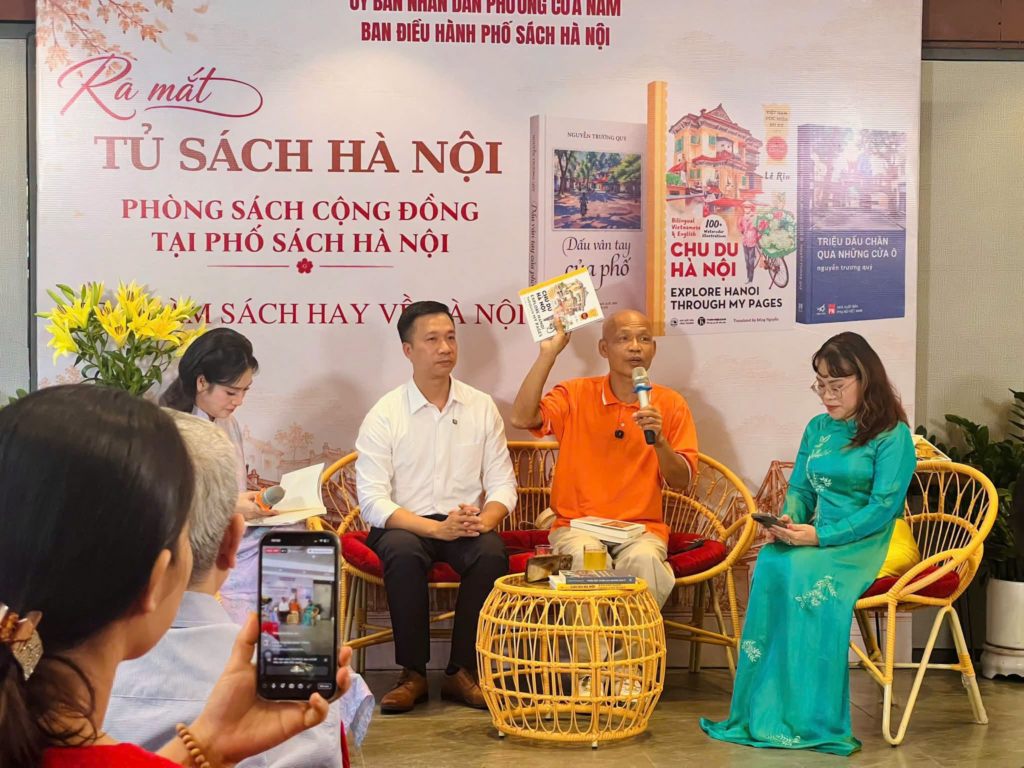
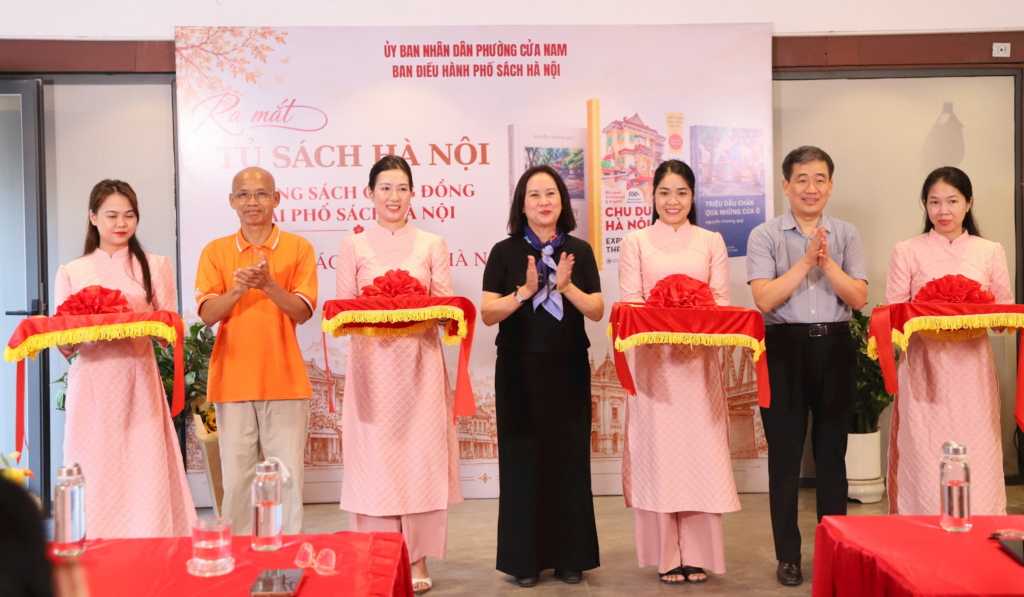
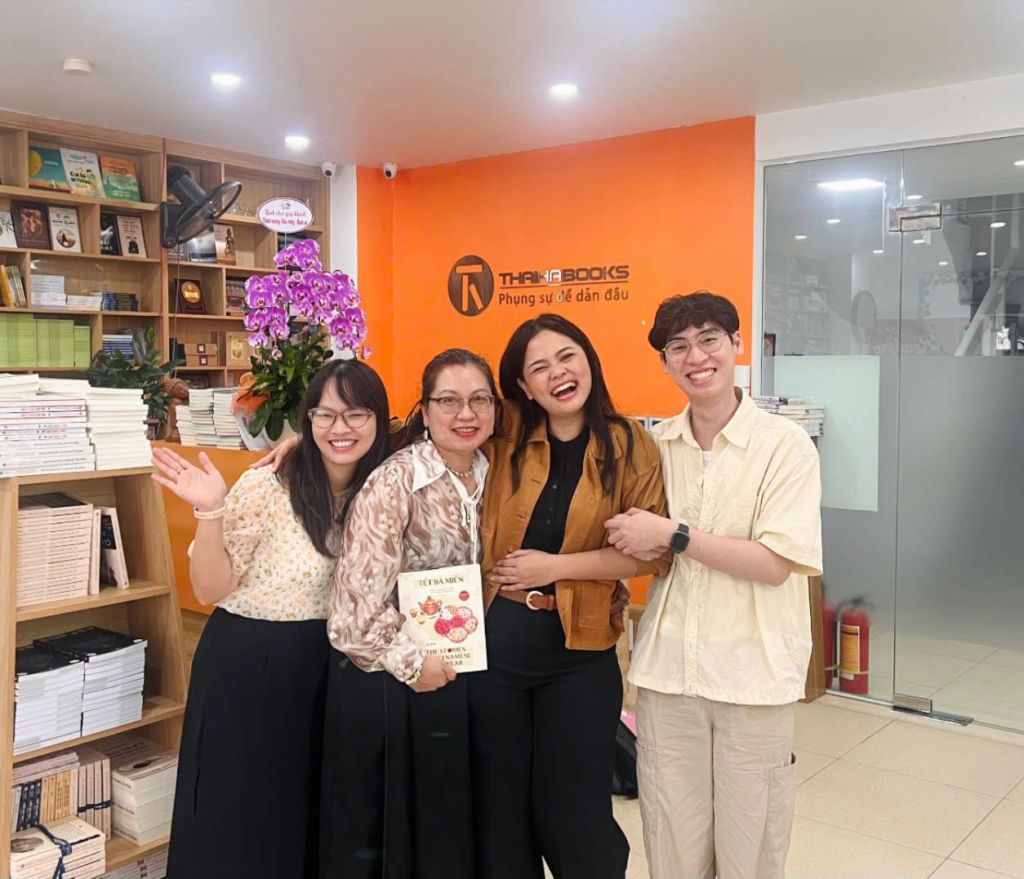
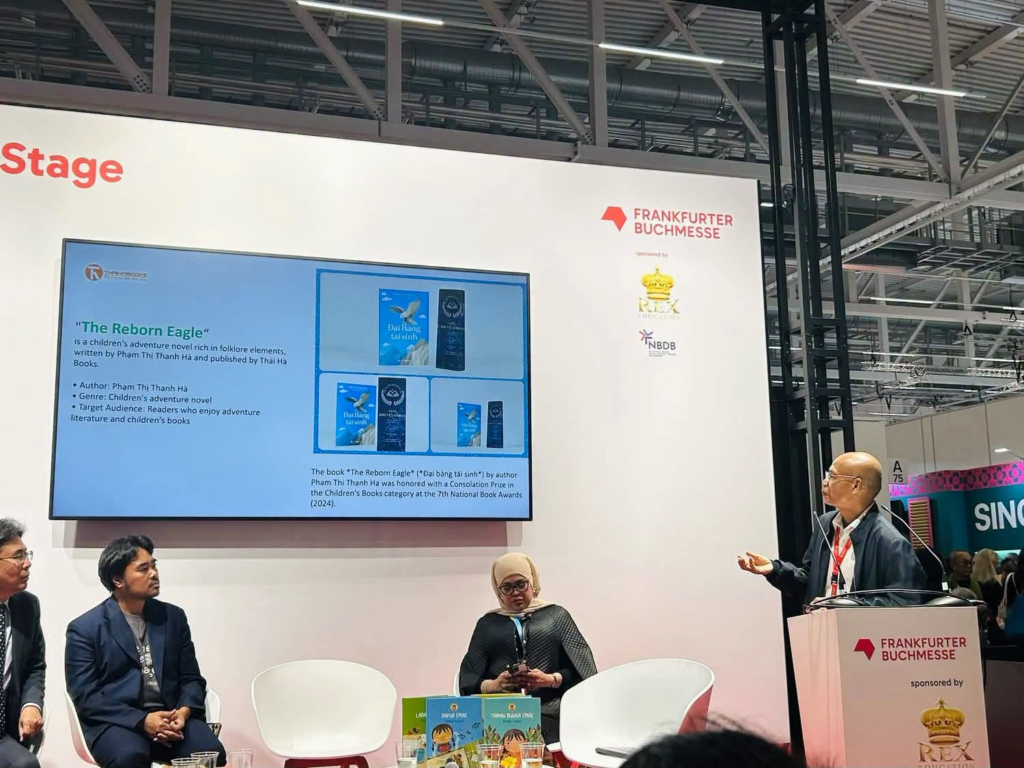
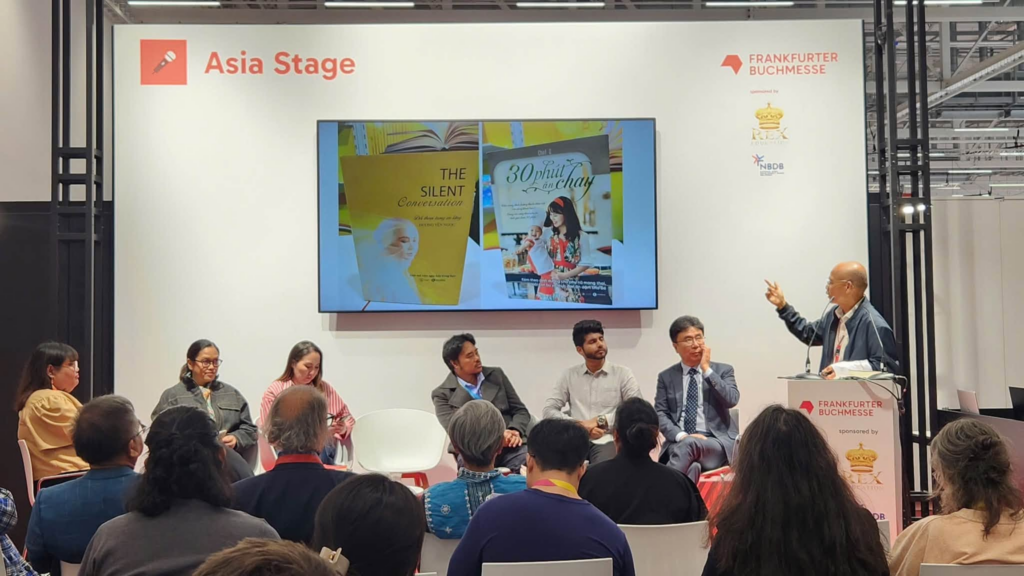
On 3 March 2026, the “Human Library” (also known as the Living Library) officially launched by Thai Ha Books marked its first milestone. Sixteen “human books” were introduced and made available for “borrowing”. The founder of this unique library, Nguyen Manh Hung, expressed his deep satisfaction.
Currently attending the Bangkok International Book Fair, one of the region’s largest annual publishing events, Dr Nguyen Manh Hung is preparing to deliver a keynote speech titled “Vietnamese Book Business and Thai Ha Books – The River of Light”. He reflected that while traditional libraries often struggle to attract readers, the greatest challenge for a Human Library lies in finding truly compelling “books”. When the “books” are of genuine quality, readers of all ages are willing to queue to engage with them.
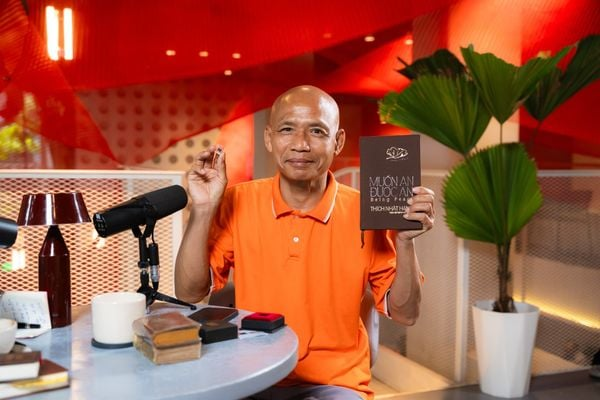
According to Dr Nguyen Manh Hung, the emergence of the Human Library model does not replace reading, but rather a thought-provoking sign of today’s spiritual life. If asked whether “we lack knowledge or lack listening”, he believes that we probably do not lack knowledge, but rather lack the ability to receive knowledge in a vivid and humane way. Today, information and knowledge can be said to be in “excess”. With just a mobile phone, we can access an immense amount of knowledge. However, knowledge is not the same as understanding. What people lack more, in his view, is deep listening and genuine connection. We read a great deal, yet rarely engage in true “dialogue”, with others and even with ourselves.
The creator of the “Human Library” stated that this special type of library exists precisely to fill that gap. It transforms knowledge from a “static” state into a “living” one. It is not merely information, but experience; not merely knowledge, but life stories; not only reading, but dialogue and empathy. He believes that this shift reflects a deeply human need: the need to be listened to and to be understood. In an increasingly digital, fast-paced and overloaded world, people tend to return to very fundamental values such as meeting face-to-face, listening to one another’s stories, and understanding one another through emotions, not just data.
However, Dr Hung also emphasised that “Books and the Human Library are not in opposition, but complement each other. Books help us go deeper, reflect, and accumulate knowledge in a sustainable way, while the Human Library helps us open up, engage in dialogue, and nurture empathy.”
A developed society, he said, is not one with the most information, but one in which people know how to listen to each other more deeply. If the Human Library helps us move closer to that, then it is a very positive sign for today’s spiritual life.
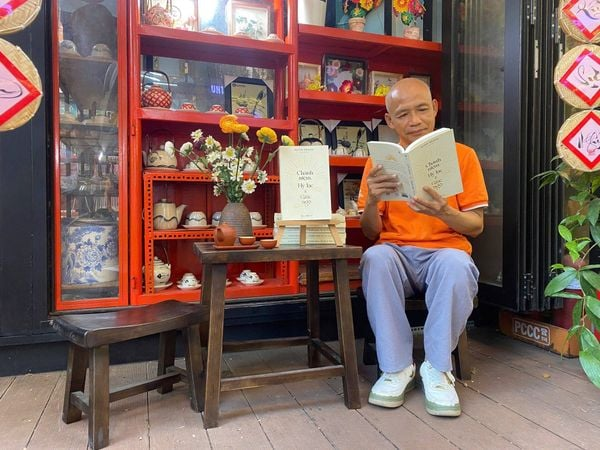
Dr Hung emphasised that a book can be read many times, but a “person” cannot be “reopened”. Yet it is precisely this “non-repeatability” that constitutes the unique value of a “human book”. Regarding the depth of experience, he sees it this way: books provide depth of thought, while “human books” provide emotional resonance and lived experience. Twenty to thirty minutes may be short in terms of time, but if the dialogue is sincere and authentic, it can create a very powerful “moment of awareness”, sometimes a single moment can change how we view an entire issue.
However, Dr Hung shared that if it stops at an emotionally rich encounter, then it is indeed not enough. For “reading a human book” to have lasting depth, three elements are needed. First, the quality of the “human book”. Not everyone can become a “book”. The selected individual must have sufficiently deep experience, storytelling ability, and the capacity for reflection—that is, the ability to turn experience into knowledge. Second, the quality of the “reader”. Participants should not merely listen for entertainment, but must know how to ask questions, listen deeply, and most importantly relate what they hear to themselves. Without this active engagement, the experience can easily pass by like a touching story and then be forgotten. Third, there must be “continuity after the encounter”. This is very important. It could involve suggesting further reading, taking notes, reflecting, or creating a community for continued discussion. In this way, the Human Library becomes a gateway to a longer learning journey, rather than a closed experience.
The founder of the Human Library always believes that “human books” are not meant to replace reading, but to awaken the need to read and to understand more deeply. It is like a spark. If it merely flashes and fades, it is just emotion; but if it is nurtured, it becomes awareness. Therefore, the depth of a “human book” does not lie in whether it lasts 20 or 30 minutes, but in whether, after those 30 minutes, the participant’s way of thinking and seeing the world has changed. If done well, even a short encounter can leave a very long-lasting resonance in a person’s development journey.
The head of Thai Ha Books stated that he is not a pioneer, but the opening of the Human Library on 3 March 2026 is the result of many years of preparation, after carefully studying the original model and visiting Human Libraries in many countries. Opening a Human Library is a necessary step, not a rushed one. In East Asian societies such as Vietnam, there are clear characteristics: modesty, privacy, reluctance to reveal imperfections, and sometimes fear of judgement. Therefore, for someone to “open their life” for others to “read” is certainly not easy, and it cannot be expected that the majority will be immediately ready.
However, Dr Hung believes this should be viewed from another perspective. Precisely because society still contains many prejudices and hesitations, models like the Human Library are even more meaningful. It creates a safe space where people can speak honestly about themselves. It allows personal stories, often hidden, to be listened to with respect, thereby gradually softening social prejudices.
To ensure that the model does not “move too quickly” compared to the community, he outlined three principles:
He noted that it is possible to begin with more “open” and familiar topics, and then gradually expand to deeper and more sensitive stories. This is not a question of whether the community is ready, but whether we create spaces that are kind enough for the community to gradually become ready.
During Reading Month in April, Dr Nguyen Manh Hung stated that a mature society is not one without hesitation, but one in which people feel safe enough to gradually speak truthfully about themselves. If the Human Library contributes to this, then even if it is a step ahead, it is still a step in the right direction.
During a live “human book reading” session attended with Dr Hung, it became clear that without careful handling, “reading people” can easily slip from knowledge into pure emotion. He believes it is important to recognise that personal experience is not complete knowledge, but it is valuable raw material for forming knowledge. The key lies in how we process that material.
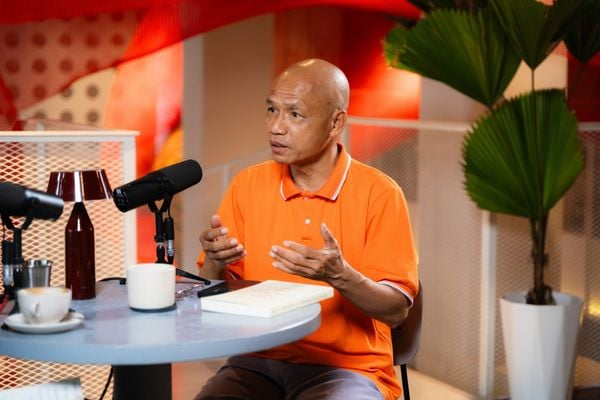
To prevent knowledge from being replaced by merely emotional stories, he outlined several principles. First, clearly distinguish between “story” and “knowledge”. A story may be very compelling, but that does not mean it is universally true. Listeners must be reminded that it is a personal experience, not a universal truth. Second, there should be “soft verification”. Not in a rigid academic sense, but the speaker should place their story within a broader context, linking it to established knowledge, research, or practice. In this way, personal experience becomes rooted in a shared knowledge base. Third, the role of organisers and facilitators is crucial. They must guide appropriate questions, maintain a balance between emotion and reason, and avoid turning the session into mere storytelling without depth. Fourth, reconnect with books and foundational knowledge. After each session, there should be suggested reading or encouragement to return to deeper study. In this way, the Human Library becomes a starting point, not an endpoint.
The founder of the Human Library in Vietnam often says humorously that emotions can open the door, but knowledge enables us to go further. If we stop at emotion, the value is short-lived. But if emotion leads to reflection and deeper inquiry, then personal experience is transformed into lasting knowledge.
Therefore, “reading people” should not replace reading books, but should become a “bridge” that brings people back to knowledge in a deeper way.
From the very first days after the Human Library officially opened and welcomed its first visitors in early March 2026, Dr Hung shared that he sees it both as a healing space and as an interesting test for modern people. In terms of healing, in a world where we are constantly connected yet lack real connection, simply having a space to sit, listen, and be heard is already of great value. Often, people do not lack advice; they lack someone willing to listen fully to their story.
From this perspective, the Human Library can create very genuine moments where people connect through sincerity, and that has a healing element.
But he also views it as a test—whether we still have the patience to listen to a story longer than a few minutes; whether we can be fully present without being distracted by phones or social media; and whether we remain open enough to understand someone different from ourselves.
If we cannot sit together for 20–30 minutes, then the issue does not lie with the Human Library, but with how we are living.
Therefore, he believes that the greatest value of the Human Library is not only healing, but reminding us of a very fundamental human capacity: the ability to listen and to be present.
He also shared that during this special April, while he is actively promoting reading culture in Vietnam and encouraging reading in Bangkok, in an era of excessive virtual connection, any space that allows people to sit together authentically is valuable—whether for healing or for asking ourselves whether we still have the ability to connect genuinely.
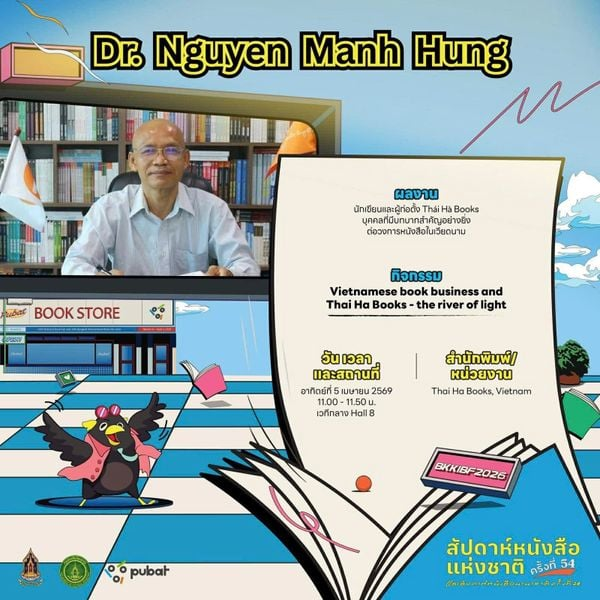
At the Bangkok International Book Fair, Dr Hung stated that what matters is not simply “a good book” or “a timely conversation”, but the right meeting between knowledge and experience, between the reader and the “human book”. A good book can change a person deeply, providing a system of thinking and a lasting understanding of the world. A timely conversation, however, can create a turning point—it touches emotions and awakens something dormant within each individual.
Books can help us understand, but people can awaken us. Often, the deepest transformation occurs when we have read something before, but only truly “realise” it when we hear a real person tell their story. Therefore, the Human Library is not outside the journey of reading promotion; rather, it occupies a very special place. It is a bridge, connecting knowledge and life, reading and understanding, and sometimes understanding and transformation.
If there are only books without dialogue, knowledge can become distant. If there are only stories without foundation, emotion can become superficial. But when the two meet, people not only know, but also understand—and live differently.
Finally, Dr Nguyen Manh Hung concluded: “At the end of the journey of promoting reading, what we seek is not more books, but awakened individuals. The Human Library is a profoundly humane way to achieve that.”
Bangkok, 3 April 2026 – Reading Month
Dinh Tai