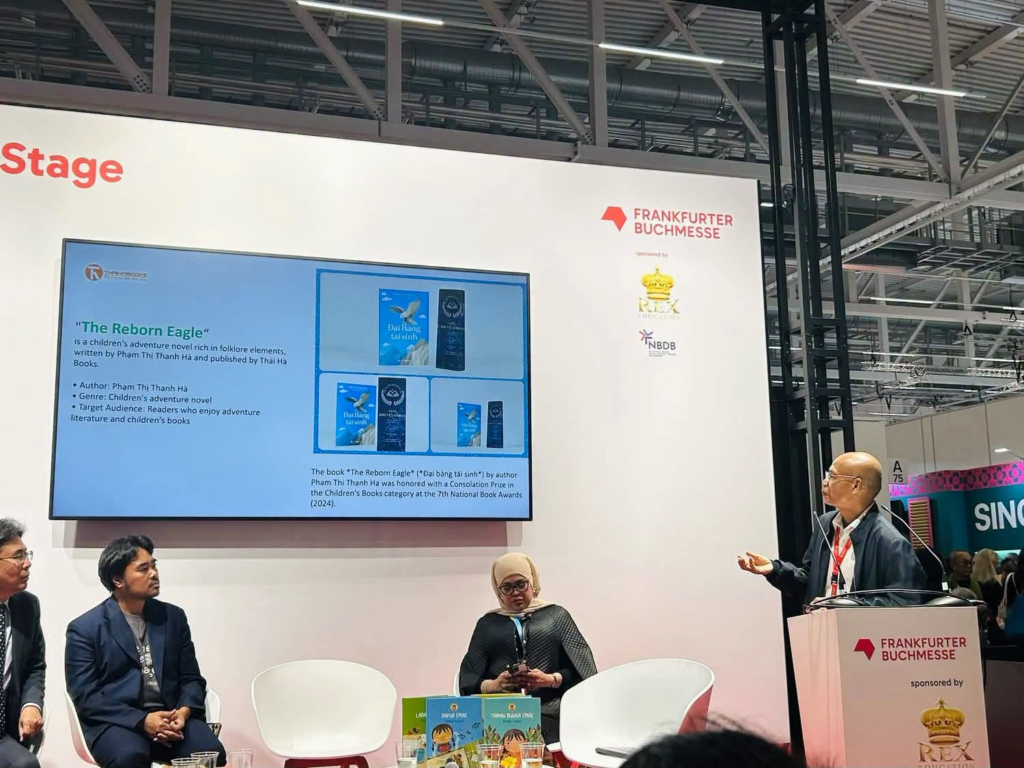
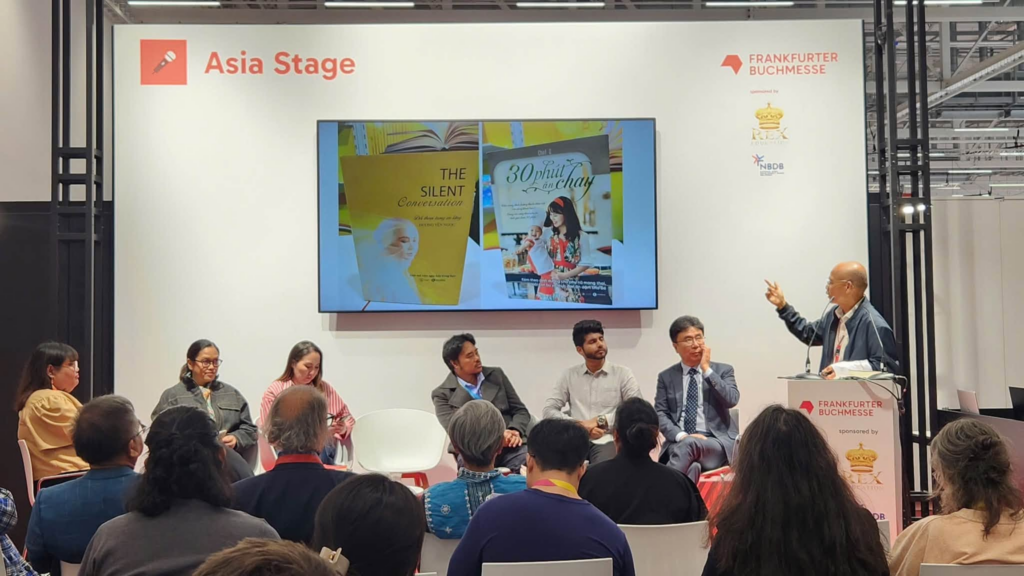
I have had the privilege of attending many of the world’s major book fairs, conferences, and publishing forums. Almost every year, I travel to Germany to take part in the Frankfurt Book Fair – the largest rights fair on the planet. There, I have met countless publishers, authors, translators, literary agents, and advocates of reading culture from across the globe.
For decades now, each time I attend such events, I carry with me a single question: When will Vietnam have an author who receives one of the world’s great literary prizes, such as the International Booker or the Nobel Prize in Literature?
When I read the news that South Korean writer Han Kang won the International Booker Prize in 2016 for The Vegetarian, and later the Nobel Prize in Literature in 2024, I felt joy for South Korea.
When I learned that Taiwanese writer Yang Shuang zi had just won the International Booker Prize in 2026 for Taiwan Travelogue, I felt joy for Taiwan.
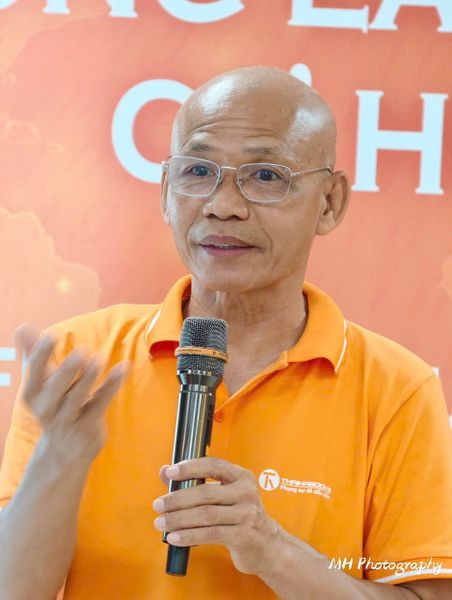
Yet at the same time, I could not help but ask myself: When will it be Vietnam’s turn?
What I find most striking, when reading these prize-winning works, is that they do not strive to appear overly erudite or complex. On the contrary, many are written with a certain simplicity – accessible, intimate, and fluid, yet they carry within them profound layers of culture, history, national identity, and universal human concerns.
The Vegetarian by Han Kang is a story of the human condition, of freedom, and of social pressure. Taiwan Travelogue speaks of colonial history, of love, of cultural identity, and of power dynamics within society. The more I read, the more I realise that what the world seeks is not sophistication for its own sake, but authenticity, uniqueness, and a deep humanity. And in this respect, I firmly believe Vietnam does not lack material.
Vietnam’s history is deep. Its culture is rich with identity. Its people carry remarkable destinies. Its society is transforming, filled with stories waiting to be told. We have war and peace. Tradition and modernity. Rural life and urban life. Integration and identity. Stories that are profoundly Vietnamese, yet unmistakably universal. What we lack, perhaps, is not the story, but an ecosystem strong enough to bring those stories to the world.
Through years of working in publishing, I have come to understand that every book that succeeds internationally is the result of an entire ecosystem. There is the author. The editor. The publisher. The rights professional. The literary agent. The media. And, above all, the translator. In the case of Han Kang, one cannot fail to mention Deborah Smith. In the case of Yang Shuang Zi, one must speak of Lin King.
The International Booker Prize is not awarded to the author alone. It is shared equally between author and translator. The message is unmistakably clear: If literature is to travel the world, it must cross the bridges of language and translators are those bridges.
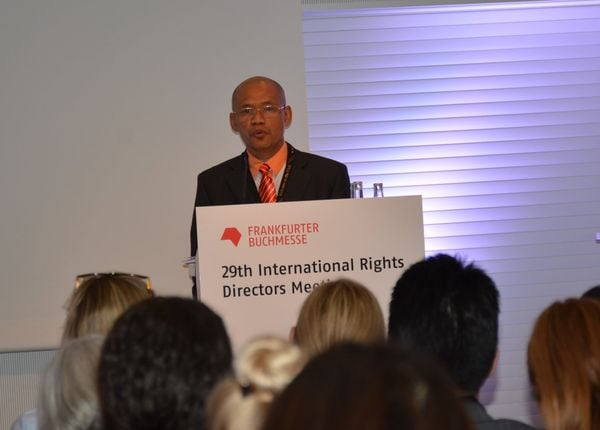
At Frankfurt, I have witnessed rights negotiations that conclude within minutes—yet are the result of years of preparation. For a book to reach international readers, it must pass through many stages: it must be discovered, introduced, translated, published, communicated, and connected to literary awards. It is a long and demanding journey.
So if you ask me when Vietnam will have an author who wins the International Booker or even the Nobel Prize in Literature, I would answer: I believe that day will come. But it will not come through waiting. It will not come through slogans. It will not come through grand conferences. It will come through serious investment in writing, in translation, in rights, and in building the global presence of Vietnamese literature.
We need more authors who write with great ambition. We need more outstanding English-language translators. We need more publishers capable of working on an international level. We need more translation funds. We need more works introduced professionally at Frankfurt, London, Bologna, Seoul, Beijing, Taipei, and other major publishing centres.
Above all, we need belief, the belief that Vietnamese literature can stand shoulder to shoulder with the literature of the world.
I have met many foreigners who love Vietnam. I have met international publishers eager to learn about Vietnam. I have met global readers who wish to read stories from Vietnam.
The world is not turning away from us. Sometimes, it is we who have not yet told our stories well enough, deeply enough, or professionally enough for the world to listen.
And so, when I read that Yang Shuang Zi had won the International Booker Prize in 2026, my first thought was not admiration, but hope. Hope that one day, not far from now, at the International Booker Prize ceremony, we will hear the name of a Vietnamese writer. And further still, in Stockholm, the world will one day call out the name of a Vietnamese author at the Nobel Prize in Literature.
That day will come, and if, from today, we begin to prepare for it with seriousness and determination. Vietnamese writers, keep striving. Vietnamese translators, keep striving. Vietnamese publishing, keep striving.
And those of us who work to nurture a culture of reading must also continue our efforts—so that Vietnamese stories may travel further, reach further, and touch the hearts of readers across the world.
4:30 a.m., Monday, 1 June 2026
Dr Nguyen Manh Hung
Chairman, Thai Ha Books