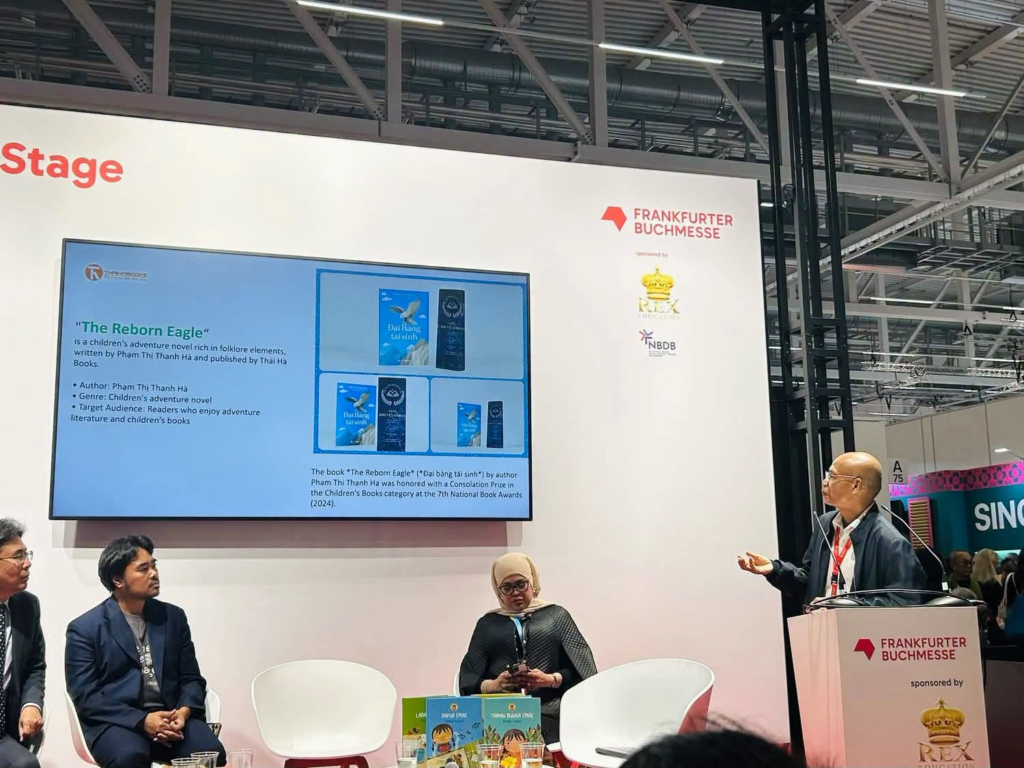
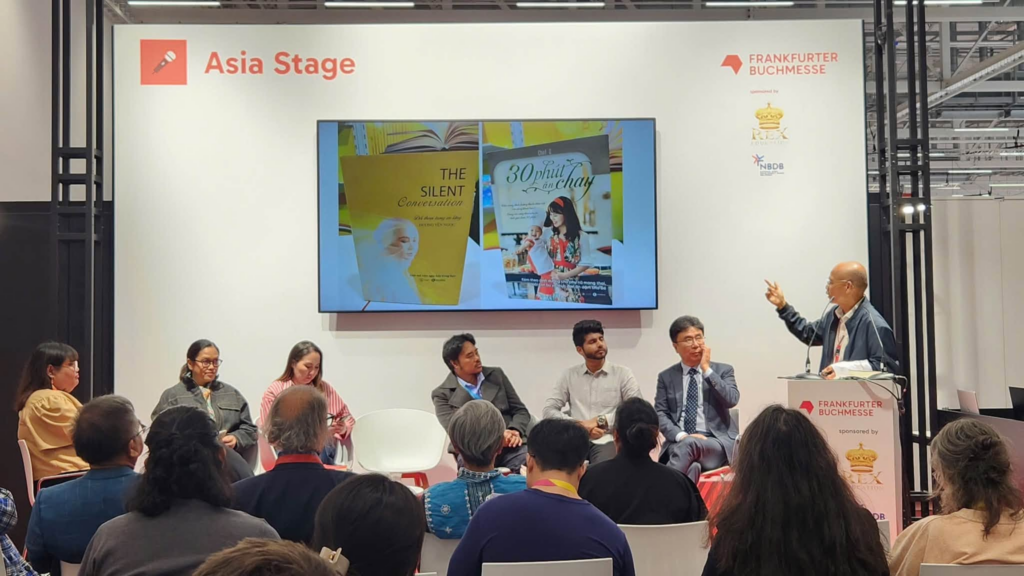
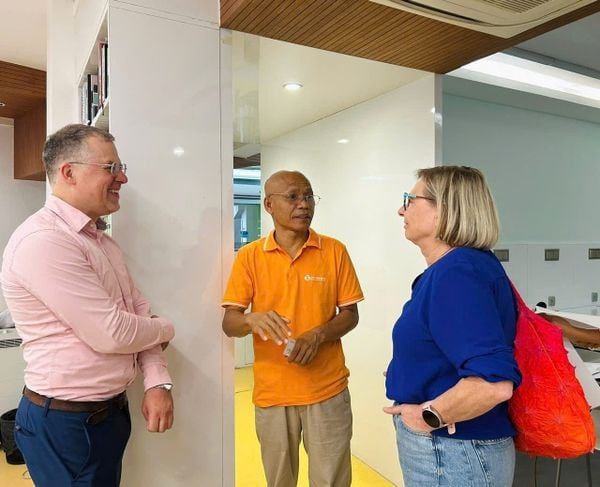
Together with Claudia Kaiser, Vice President of the Frankfurt Book Fair, I recently had the opportunity to attend European Literature Days 2026, held in Hanoi and Ho Chi Minh City, featuring a wide range of engaging events. This year’s programme welcomed numerous writers, scholars, translators, and publishers from across Europe. In particular, the German book exhibition “Echoes of the Present: Traversing Trauma, Technology and Tomorrow”, organised in collaboration with the Frankfurt Book Fair, left me with many reflections.
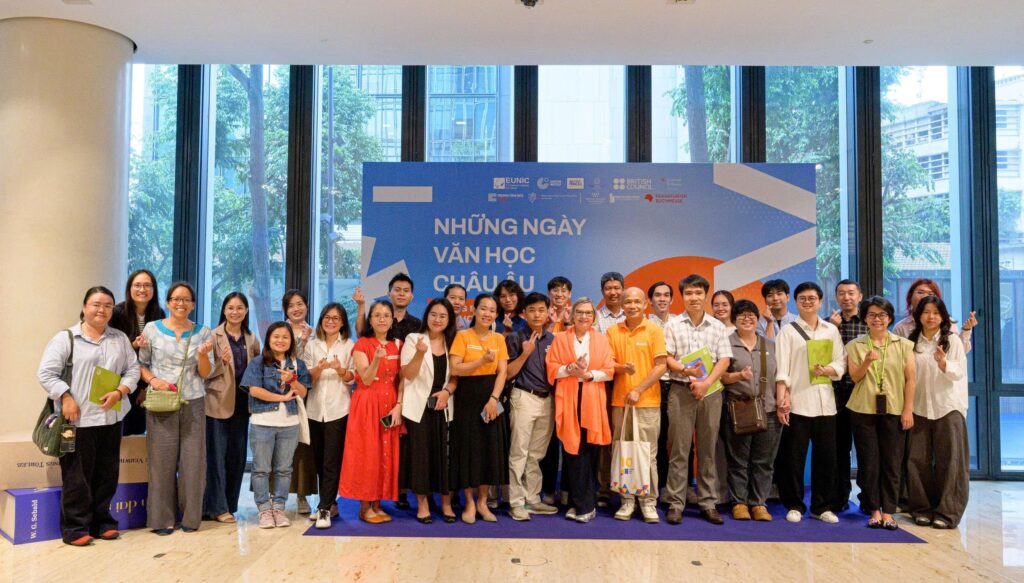
Once again, I realised that books are not merely cultural products. They are bridges. They connect people to people, nations to nations, and link the past with the present and the future.
Throughout more than ten days of the programme, readers and participants were invited to listen to deeply profound dialogues, on the loneliness of modern humanity, on fractures within society, on identity, language, memory, and the healing power of literature. Writers from diverse cultural backgrounds sat together to exchange ideas, share perspectives, and inspire one another.
What struck me most was this: Europe has been bringing its literature to Vietnam in a systematic, professional, and persistent manner for many years. Why, then, have we not yet created programmes of similar scale to bring Vietnamese literature to Europe?
In my view, the time has come to organise “Vietnamese Literature Days in Europe”. Claudia Kaiser shares this perspective. She even suggested organising Vietnamese language programmes for Germans in Germany, so that they may learn the language and better explore Vietnam—its literature and its culture. I believe that such initiatives would also help cultivate a new generation of skilled translators to bring Vietnamese books into German, the language of the Frankfurt Book Fair.
Vietnam possesses a history spanning thousands of years, a rich literary heritage, and works that profoundly reflect life, war, peace, renewal, development, and the aspirations of the Vietnamese people. We have writers, poets, scholars, translators, and publishers who are fully capable of bringing these values to the world.
If “Vietnamese Literature Days” could be organised in major European cultural centres such as Frankfurt, Berlin, Paris, Brussels, Vienna, or Prague, we would create immensely important opportunities:
First, to promote Vietnam’s image through the soft power of culture and literature.
Second, to foster the translation and publication of Vietnamese works into multiple European languages.
Third, to build networks of cooperation among publishers, book fairs, cultural institutions, and universities.
Fourth, to create opportunities for Vietnamese authors to meet international readers directly.
Fifth, to enhance the position of Vietnam’s publishing industry on the global publishing map.
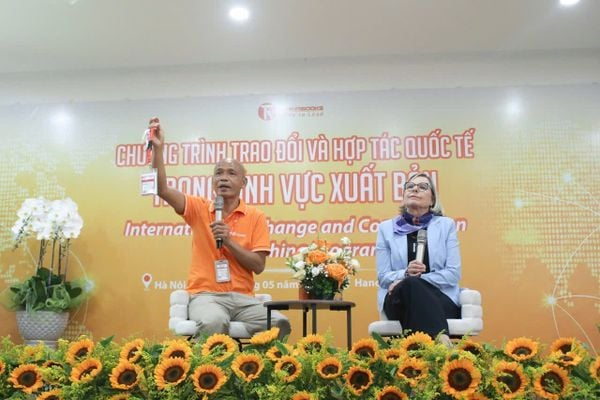
In recent days, I have been delighted to engage in many discussions with Claudia Kaiser on Asia–Europe cooperation, particularly Vietnam – Germany relations. We have explored possibilities for long-term collaboration between Vietnam’s publishing industry and international partners. I believe this is a highly favourable moment to turn these ideas into reality.
I am also deeply impressed by the spirit that the Goethe-Institut has upheld for decades: viewing culture as a bridge, dialogue as a pathway, and diversity as a strength. This is something Vietnam can equally embrace as it brings its literature to the world.
From the Frankfurt Book Fair, from the Goethe Institut, and from the many international literary exchanges I have attended, I have come to believe even more strongly that literature does not merely reflect its time, it opens new pathways to the future.
The time has come for us not only to host international literature days in Vietnam, but also to proactively bring Vietnamese Literature Days to Europe.
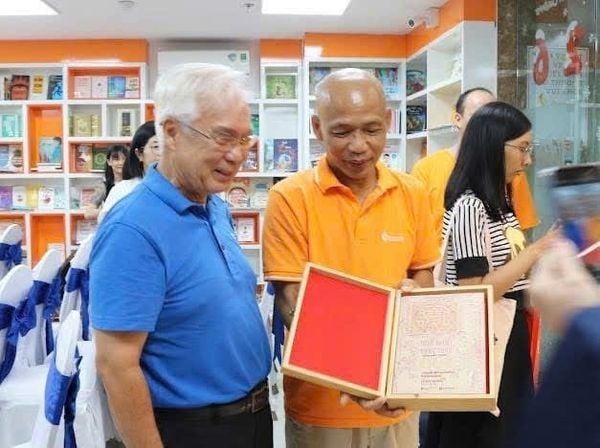
When Vietnamese stories are told in many languages, when Vietnamese books are present in international bookstores and libraries, and when Vietnamese writers engage in dialogue with global readers, this is not merely a success for the publishing industry.
It is also a success of cultural diplomacy, of national image, and of the aspiration to bring Vietnamese intellect into deeper integration with the world.
I hope that in the near future, we will witness Vietnamese Literature Days in Europe being organised annually, becoming a respected cultural event with wide-reaching influence.
And I believe the time to begin is now. I will meet writer Nguyen Quang Thieu as soon as he returns from his working trip to Russia, to raise this idea and discuss it further—lest we miss the opportunity.
Dr Nguyen Manh Hung
Chairman, Thai Ha Books
Deputy Head of International Cooperation, Vietnam Publishing Association